Methyl Ethyl Ketone (MEK) Lab Grade
Price range: $137.18 through $754.49
Description
Methyl Ethyl Ketone (MEK)
99.9% Lab Grade – C4H8O
Methyl Ethyl Ketone (MEK), also known as butanone is an organic compound. Its a colorless liquid and has a sweet order similar to acetone. MEK is a widely used in commercial applications and as a solvent, and it dissolves many substances. Our MEK is a very high purity percentage which make it appropriate for use in laboratory and analytical applications. MEK has a flash point 20 °F. Vapors heavier than air. Does not react with water. It is partially soluble in water, and soluble in most other organic solvents. It will float on water while it rapidly dissolves in it
MEK goes by a couple of names: 2-Butanone, Butan-2-one, Butanone, Ethyl methyl ketone, Methylethyl ketone
| Chemical Formula: | C4H8O |
| Molecular Weight: | 72.1057 |
| CAS Registry Number: | 78-93-3 |
| Appearance | Colorless Liquid |
| Odor: | Mint or acetone-like |
| Density | 0.8050 g/ml |
| Boiling Point: | 79.64C/175.35F |
| Solubility in water: | 27.5g/100ml |
| GHS Pictograms: |   |
| GHS Signal Word: | Danger |
| GHS Hazard Statements: | H225, H319, H336 |
| GHS Precautionary Statements | P210, P233, P240, P241, P242, P243, P261, P264, P271, P280, P303+P361+P353, P304+P340, P305+P351+P338, P312, P337+P313, P370+P378, P403+P233, P403+P235, P405, P501 |
| UN Identification Number: | 1193 |
| Proper Shipping Name: | Ethyl Methyl Ketone |
| Transport Hazard Class: | 3 |
| Packing Group: | II |
| DOT Placard: | |
What is Methyl Ethyl Ketone?
Methyl ethyl ketone (MEK), also known as butanone, is a colorless, volatile liquid organic compound with the chemical formulaC4H8O. It is classified as a ketone, characterized by the presence of a carbonyl group (C=O) bonded to two carbon atoms.
How Is Methyl Ethyl Ketone Produced?
While Methyl Ethyl Ketone is biosynthesized by trees and is found in small quantities in foods such as some fruits and vegetables, chicken, beans, honey, and a wide variety of cheeses, the majority of Methyl Ethyl Ketone is produced using dehydrogenation of secondary butyl alcohol (approximately 86%) and as a byproduct of butane oxidation (remaining 14%).
How is Methyl Ethyl Ketone Stored and Distributed?
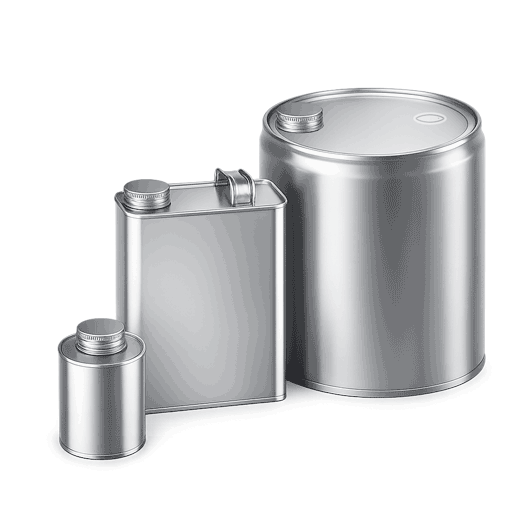
Methyl ethyl ketone is packed in drums. It should be stored in a cool, dry, well-ventilated area that is free from the risk of ignition as it is highly flammable. For transportation purposes, methyl ethyl ketone is classified as packing group II and a hazard class 3 with a flashpoint of -9° C
What is Methyly Ethyl Ketone Used For?
Methyl Ethyl Ketone is used as a solvent in the manufacturing of adhesives, protective coatings, inks and magnetic tapes. It is also the preferred extraction solvent for dewaxing lube oil.
Is Methyl Ethyl Ketone Banned?
Methyl ethyl ketone (MEK) is not banned nationally, but it is banned in Southern California and some states with strict VOC laws.
What are the dangers of Methyl Ethyl Ketone?
The compound is rated a 1 for health under the NFPA 704 indicating that exposure should only cause a minor residual injury.
To avoid inhalation occurring, especially for regular uses, adequate ventilation should be ensured with local exhaust ventilation and enclosures. The direct inhalation of high levels of MEK may cause dizziness, nausea, headaches, irritation of the respiratory system and chest tightness. If the individual has difficulty breathing, they should be moved to air free of the vapours and be provided oxygen until medical assistance is available.
Direct eye exposure can cause sore, stinging, red eyes with tearing and vapours can also irritate the eyes. Chemical safety goggles should therefore be used when contact with the eyes is possible. Repeated or prolonged skin contact should be avoided as this can cause irritation and dryness. Therefore, gloves, aprons and appropriate boots should be worn when repeated contact with MEK is possible.
Related products
-
Deionized Water
Price range: $109.74 through $576.16 Select options This product has multiple variants. The options may be chosen on the product page -
Isopropyl Alcohol 70% USP
Price range: $144.04 through $3,429.50 Select options This product has multiple variants. The options may be chosen on the product page -
Hydrogen Peroxide 50% Food Grade
Price range: $384.10 through $898.53 Select options This product has multiple variants. The options may be chosen on the product page -
Nitric Acid 67% Lab Tech Grade (42° Baumé)
Price range: $255.15 through $1,282.63 Select options This product has multiple variants. The options may be chosen on the product page