FYRA Vacuum Gauge for End of Primary Drying Detection UL/CSA/CE certified
$5,987.23
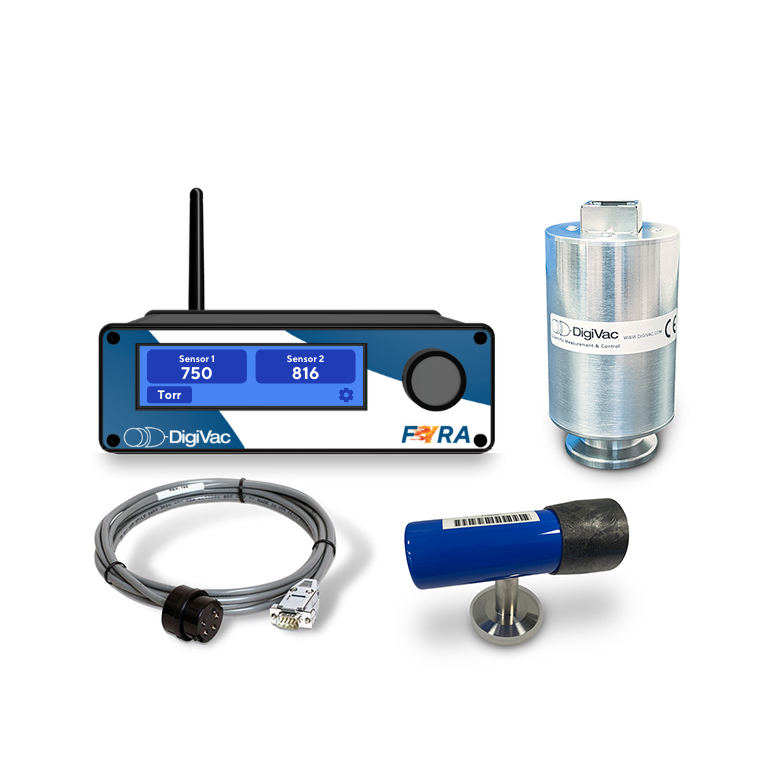
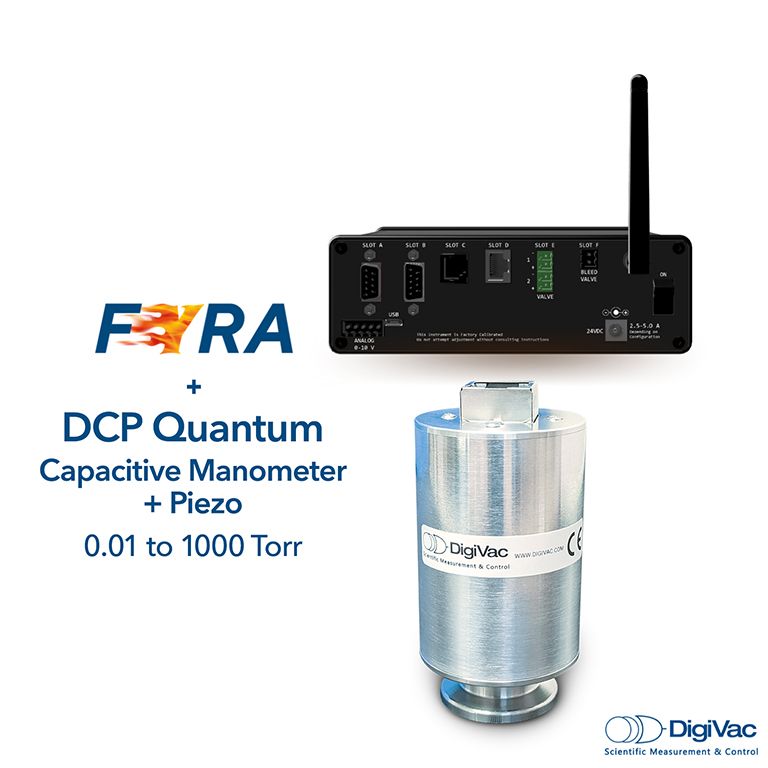
FYRA for End of Primary Drying Detection. This bundle is set up to allow for vacuum drying applications like freeze-drying and vacuum ovens to help determine the end of drying. Will help you detect when most of the water or residual solvent from a product has been removed or the end of primary drying has been reached in a vacuum drying application.
Description
FYRA for End of Primary Drying Detection. This bundle is set up to allow for vacuum drying applications like freeze-drying and vacuum ovens to help determine the end of drying. Will help you detect when most of the water or residual solvent from a product has been removed or the end of primary drying has been reached in a vacuum drying application.
Background on How this FYRA End of Primary Drying package works:
When a freeze dryer is equipped with both a thermal and direct measurement, these sensors can be utilized to indicate the end of primary drying.
Step One: Clean process documentation | Get a baseline
- Characterize the convection-enhance pirani and the capacitance manometer (in this case the DCP Quantum) against each other in a dry, empty and refrigerated system. The freeze dryer is turned on, as per the manufacturer’s operator manual, with nothing on the shelf. The shelf temperature can be left at room temperature, and if so the cold trap, the condenser, and the vacuum pump should be on and running for a period of time
- The vacuum oven or freeze dryer is allowed a period of time to become stable in this condition and the pirani and capacitance manometers are read. The difference in their pressure readings in a dry, empty and refrigerated freeze dryer will be relatively small (mT to 10’s of mT) when the system is working properly.
- DigiVac will NOT calibrate these two gauges against each other. There may always be slight differences in their readings do to their difference in design.
- The difference in pressure (ΔP) between these two gauges, when dry, empty and refrigerated, indicates how close they come together when there is little to no water vapor in the gas mix over the product.
Step 2: Drying with Product
- The intent of primary drying is to maximize the sublimation rate within the product. As such the gases in the chamber have a high water vapor content.
- The pirani sensor will read a higher pressure than the capacitance manometer. As freeze drying progresses the amount of ice converting to vapor through the sublimation process will decrease as the product becomes lyophilized from top through the bottom of the product.
- Eventually the pirani and capacitance manometers will approach the ΔP that was established in a dry, empty and refrigerated system. Approaching this ΔP value indicates that the end of primary drying has occurred.
The DigiVac FYRA controller has a rich remote command line interface which enables the user a high degree of remote control and monitoring from any computer when communicating through the USB port.
- Calibrated—Every FYRA is calibrated and pretested under actual vacuum against a NIST standard (Need NIST traceable documentation? Add this option to your order)
- Applications—Ideal for End of Drying Detection, Freeze Drying Primary Drying Monitoring, and Vacuum Oven Drying Monitoring and Detection
- DCP Quantum DuoSense Measurement Range: .05 mT to 1000 Torr
- 275 Convection-enhanced pirani Measurement Range: 0.1mT to 1000 Torr
FYRA Bleed Vacuum Controller Components:
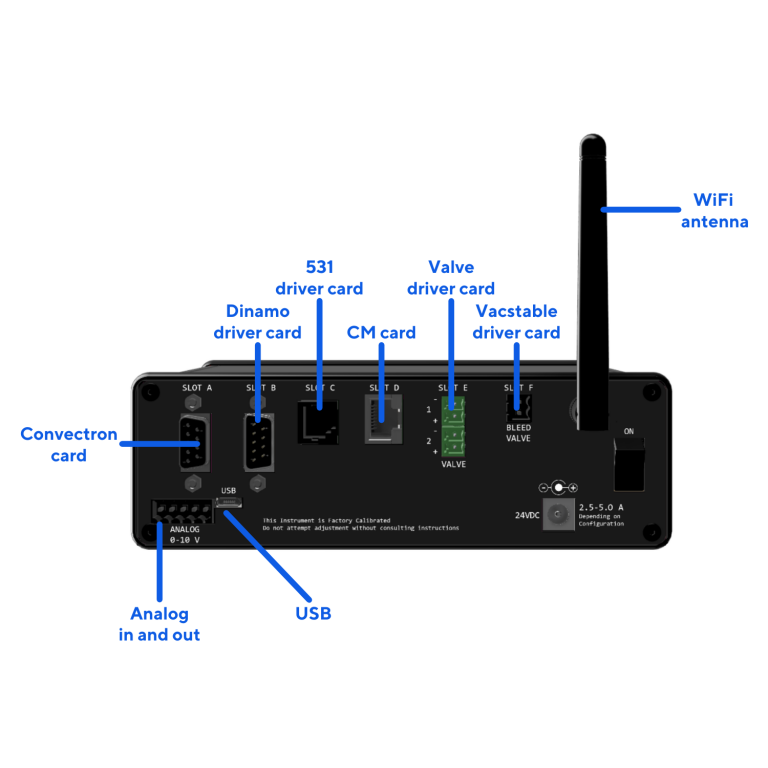
- FYRA controller
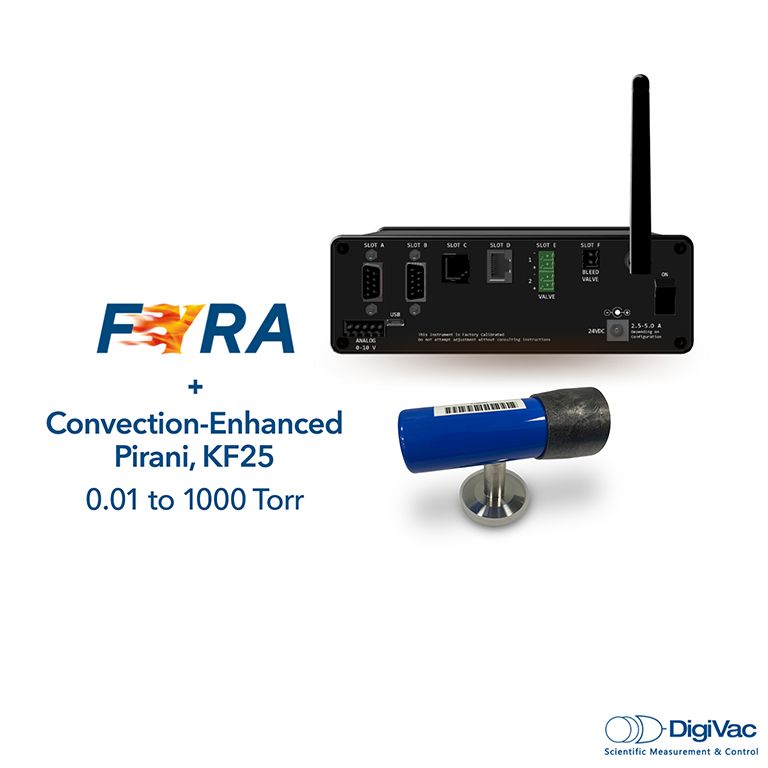
- Convection-enhance pirani KF25 gauge sensor | Lesker 275, driver card, and pirani sensor cable
- Quantum DCP Gauge and driver card | DuoSENS Capacitive Piezo Vacuum Sensor 0.01 to 1000 Torr, Gas Independent
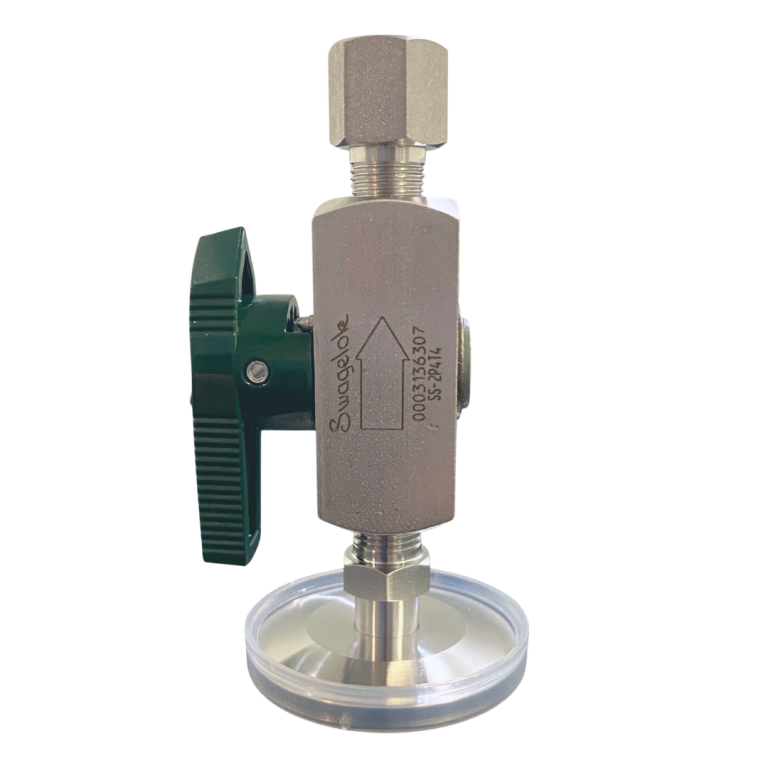
- KF25 Manual Purge Valve | supports purging and flushing the system so that pressure delta is not affected by trapped vapors.
- FYRA controller
- Convection-enhance pirani KF25 gauge sensor | Lesker 275, driver card, and pirani sensor cable
- Quantum DCP Gauge and driver card | DuoSENS Capacitive Piezo Vacuum Sensor 0.01 to 1000 Torr, Gas Independent
- KF25 Manual Purge Valve | supports purging and flushing the system so that pressure delta is not affected by trapped vapors.
- 2x KF25-T connections
- 1x KF16-25 adapter
- 1x KF16-FC-CR clamp & O-ring
- 6x KF25-FC-CR clamps & O-rings
3 Simple Steps for Vacuum Process Set-up with FYRA Vacuum Controller:
- Plumb the vacuum gauge(s) and valve into your vessel
- Connect the sensor, power, and I/O cables into FRYA
- Measure and control vacuum
Technical Specifications
|
Related products
-
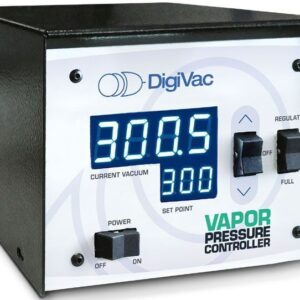
DigiVac Vapor Pressure Controller with Real-Time Analytics
$2,680.37 Select options -
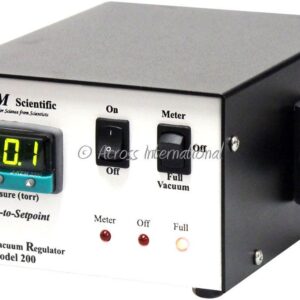
JKEM DVR-200 DVR-300 Digital Vacuum Regulator
$2,580.40 Select options -
Fraction Finder Ultra with Size 34 Sensor With Ultra-sensitivity
$6,601.31 Add to cart -
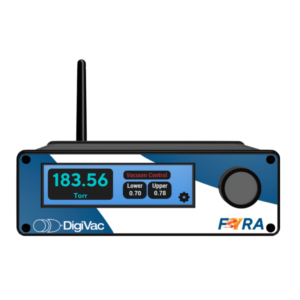
FYRA Vacuum Controller UL/CSA/CE certified
Contact for Pricing