JKEM DVR-200 DVR-300 Digital Vacuum Regulator
$2,630.46
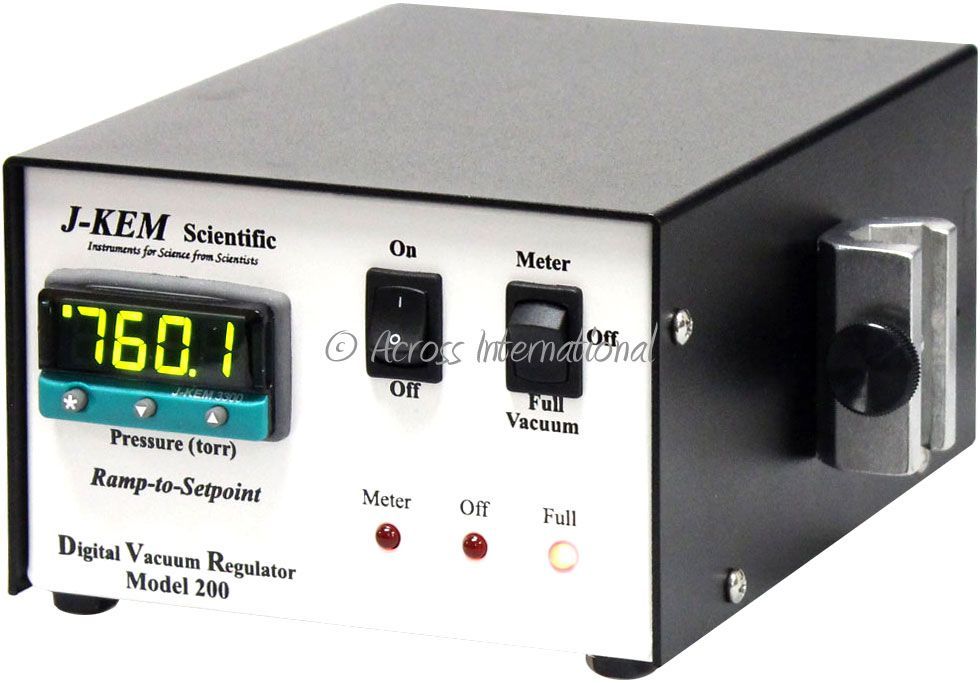
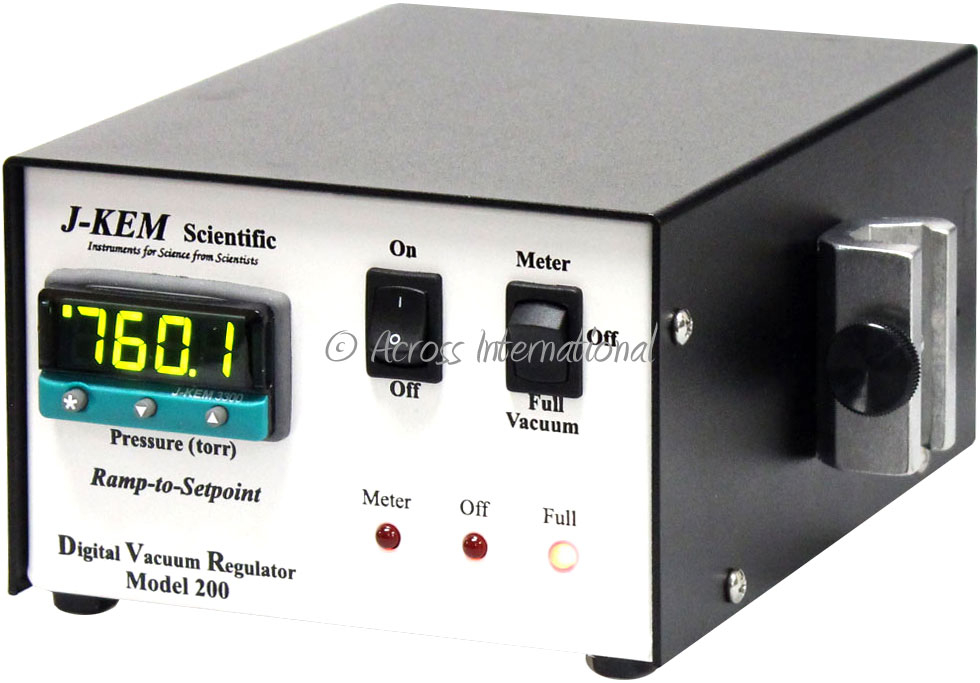
JKEM model DVR-200, an ideal instrument for laboratory vacuum regulation. Designed for continuous vacuum sources, such as oil-filled vacuum pumps, aspirators, or systems that are always on, like in-house vacuum systems. The DVR-200 regulates pressure by opening and closing a valve that separates the vacuum source from the system being evacuated. In most cases, the DVR-200 is the best choice.
Description
JKEM model DVR-200, an ideal instrument for laboratory vacuum regulation.
Designed for continuous vacuum sources, such as oil-filled vacuum pumps, aspirators, or systems that are always on, like in-house vacuum systems. The DVR-200 regulates pressure by opening and closing a valve that separates the vacuum source from the system being evacuated. In most cases, the DVR-200 is the best choice.
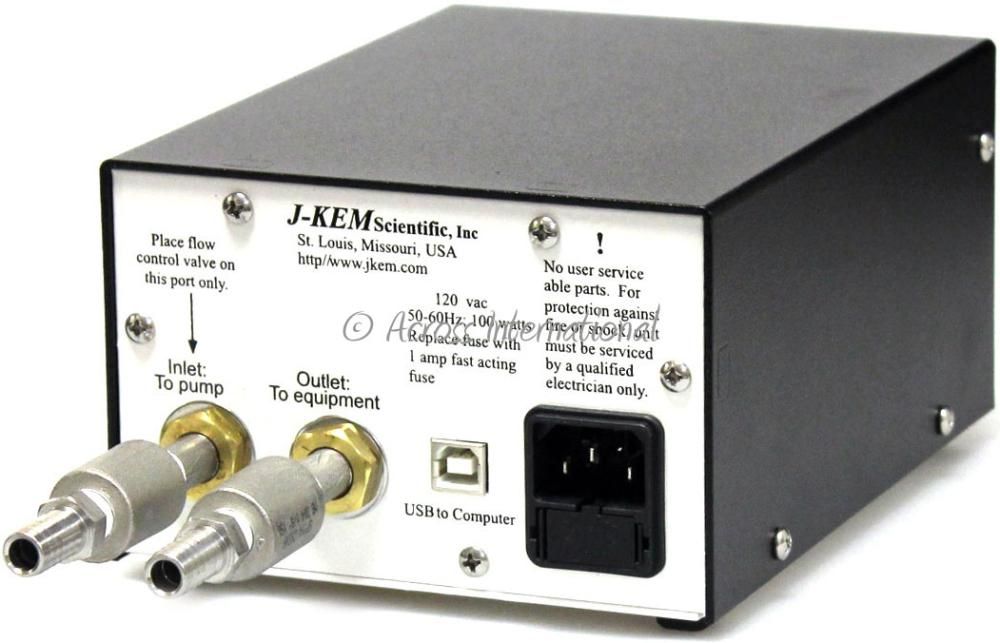
Connect the regulator to any vacuum pump or vacuum source and then to any piece of equipment to regulate pressure in most cases to 1 torr. A pressure ramp feature evacuates equipment at a user defined rate to eliminate bumping due to solvent degassing or over-evacuation. The vacuum regulator is ideally suited for large volume distillations, rotary evaporators and vacuum chambers. Recover > 99% of solvent from rotary evaporators.
Features
- NO mercury
- 100% digital pressure entry and control
- Wetted parts are 100% stainless steel and Teflon
- Vacuum ramping feature eliminates bumping
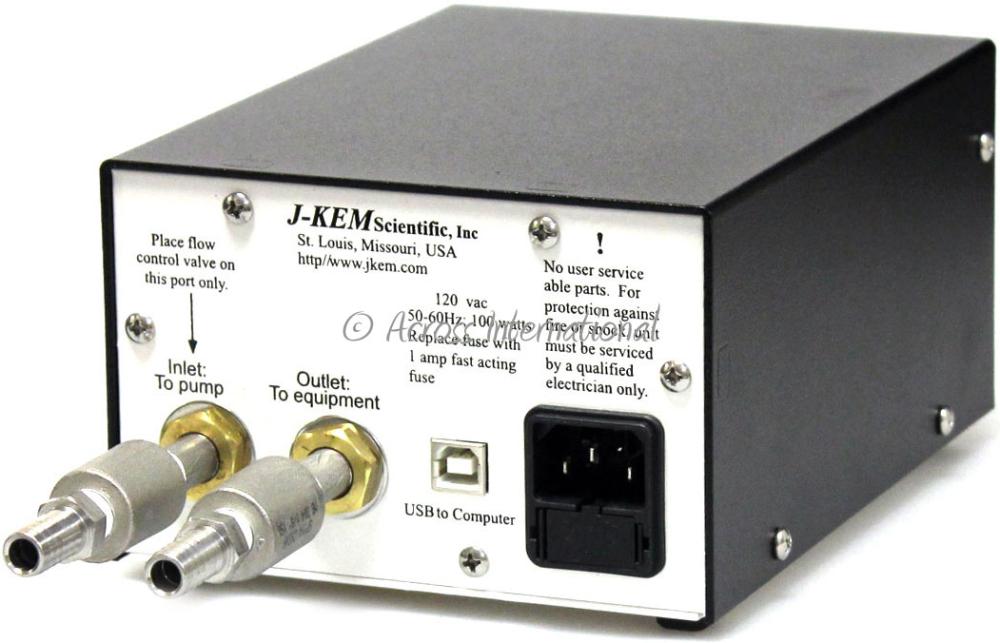
- USB port and free software for PC control
- Resists all organic solvents and acids bases water
- Comes standard with 3/8″ hose barb connectors and mouting bracket for immediate use
Use with Rotary Evaporators.
Your vacuum regulator is ideally suited for use with rotary evaporators. To demonstrate the simplicity of the regulator, the following example is given.
- Set the Regulator Selection Switch (6) to the OFF position and then turn on the power to the DVR. Turn on the vacuum pump.
- Enter a set point into the regulator appropriate for the solvent being removed, for example, 300 torr for CH2CI2.
- Place the flask on the rotovap and move the regulator switch from the OFF to the METER position. When in the OFF position, the regulator isolates the rotovap from the vacuum pump so the rotovap can be open to the atmosphere while the pump is running. When placed in the METER position, the regulator evacuates the rotovap to the pressure entered into the meter.
- When the majority of the solvent is removed, move the regulator switch from the METER to the FULL VACUUM position. When in the FULL VACUUM position, the regulator ignores the set point pressure and fully evacuates the rotovap removing the last amount of solvent.
- When all the solvent is removed, place the regulator switch to the OFF position and remove the flask. Place the next flask on the rotovap and move the regulator switch to the METER position to begin the process again.
For the entire rotary evaporation process the only action needed is to change the position of the regulator switch. The pump can run continuously and theres no need to change the set point pressure. Solvent recoveries from a typical rotary evaporator are shown in the table below.
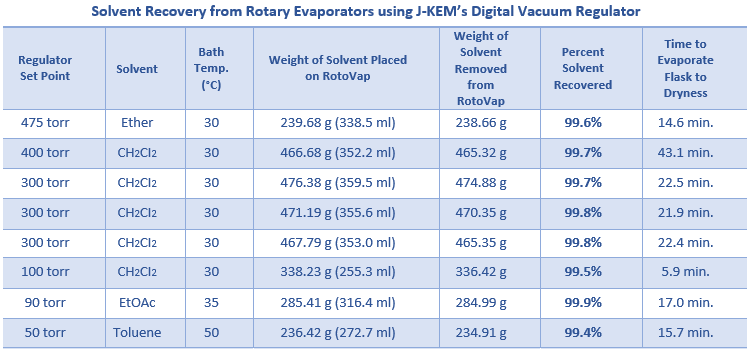
Test Conditions: Buchi RE 111 evaporator equipped with a dry ice condenser. Vacuum pump ultimate pressure = 0.01 torr. All tests were conducted using a 500 ml round bottomed flask at the pressure shown.
Vacuum Requirements: The type of vacuum source (i.e. a high vacuum pump, aspirator, or in-house vacuum system) has no affect on the regulators operation or performance. The only requirement is that the vacuum source be lower in pressure than the pressure you want to regulate the equipment at. That is, to achieve a vacuum or 40 torr in the attached equipment, the vacuum source must be at least 40 torr. The Digital Vacuum Regulator doesnt create a vacuum; it only regulates the vacuum from an external vacuum source.
Specifications
|
Standard package
|
Related products
-
DigiVac FYRA Bleed Vacuum Controller 10 millitorr to 6 Torr
$4,465.97 Select options -
Collection Jar Bundle for Arometrix Fraction Finder
$283.76 Add to cart -
Ai-DigiVac Concerto 4-Channel Vacuum & Pressure Controller – UL/CSA
$7,732.46 Select options -
DigiVac Bullseye Precision Vacuum Gauge with Real-Time Analytics
$809.07 Select options